
Are you frustrated because your nose still looks crooked after rhinoplasty? Do you feel like your results didn’t match your expectations?
If you live in St. Petersburg, Tampa, Clearwater, or anywhere in the Tampa Bay area, you are not alone. A crooked or deviated nose after surgery is one of the most common reasons patients seek revision rhinoplasty.
Dr. Kailash asimhan, a board-certified plastic surgeon in St. Petersburg, Florida, specializes in advanced structural rhinoplasty techniques designed to correct nasal deviation, restore symmetry, and improve breathing.
This comprehensive guide explains:
Before discussing surgical causes, it’s important to understand one key concept:
No face is perfectly symmetrical.
Even in patients who have never had surgery, subtle asymmetries exist in:
When rhinoplasty does not fully account for these asymmetries, the nose may appear off-center—even if technically aligned to the facial midline.
This is why advanced facial analysis is critical before performing cosmetic or revision rhinoplasty in Tampa Bay.


4
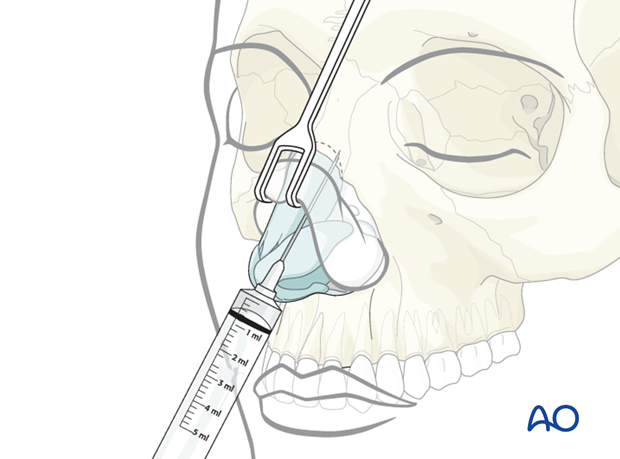
The septum is the internal wall of cartilage and bone that separates the nostrils. If it remains deviated after surgery—or shifts during healing—the nose can look crooked externally.
In many cases:
In Tampa Bay patients seeking revision rhinoplasty, septal deviation is one of the most common structural causes of a crooked nose.
The nose is not just skin—it is a complex architectural framework.
If proper support techniques were not used:
This is especially common in:
Without structural grafting, the nose may look straight immediately after surgery but gradually deviate during healing.
4
If nasal bones are not properly mobilized and repositioned during surgery, they can heal unevenly.
Precise osteotomies (controlled bone cuts) are necessary to:
Improper bone healing is a common reason patients in Tampa and Clearwater seek corrective rhinoplasty.
Scar contracture can subtly pull the nose off-center. Healing forces vary from patient to patient.
Swelling can last:
Early asymmetry does not always mean a failed surgery. However, if deviation persists beyond one year, structural revision may be required.
You may be a candidate if:
Revision rhinoplasty is more complex than primary surgery and should be performed by a surgeon experienced in advanced structural correction.
Every nose is different. Treatment is customized based on anatomy, scar tissue, and prior surgical history.
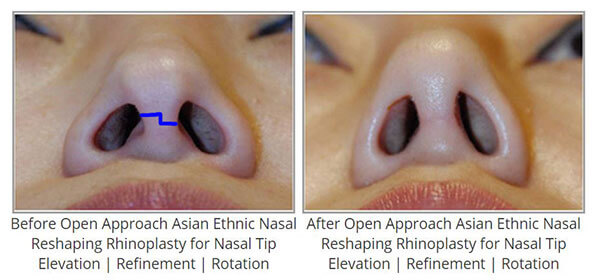
4
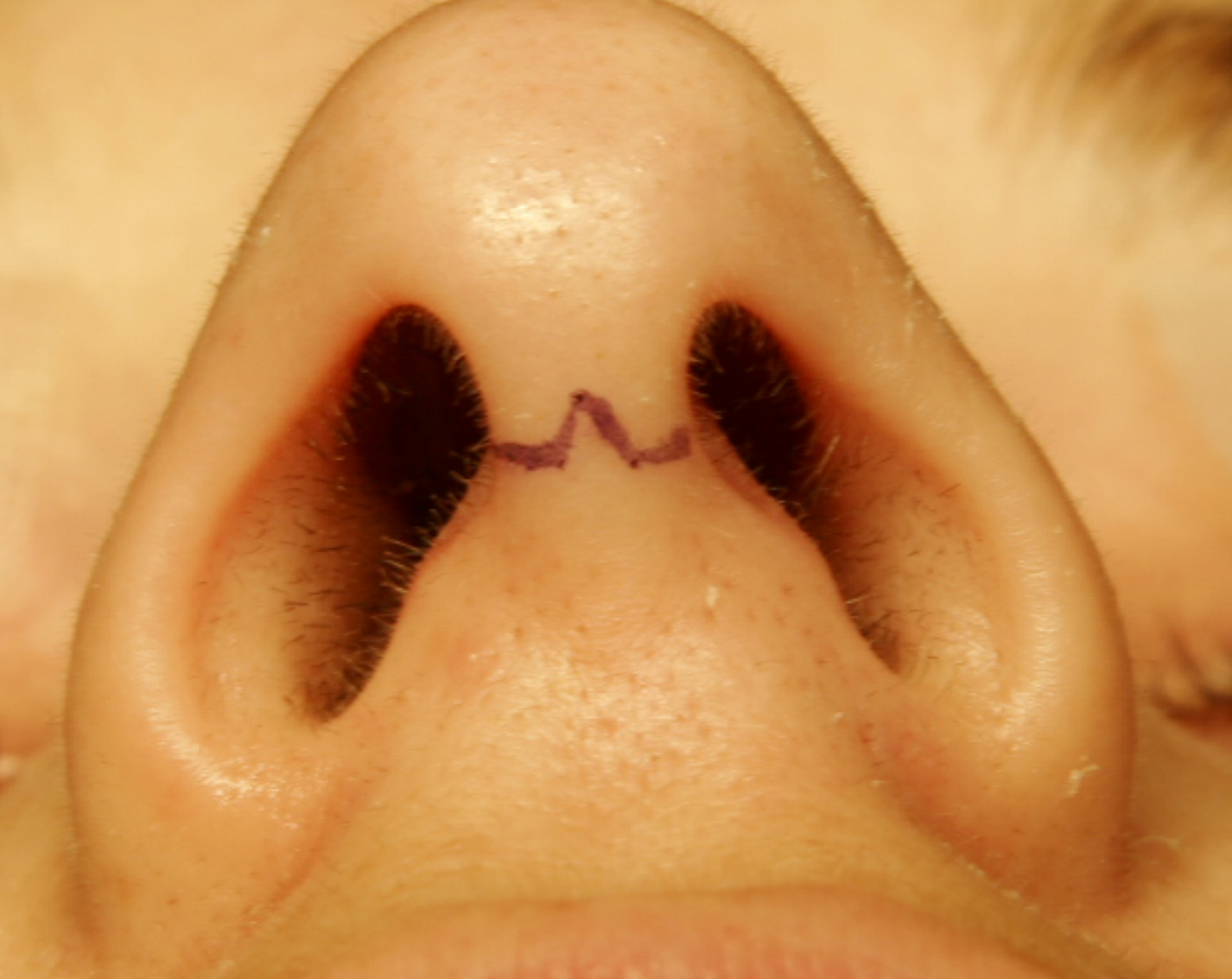
Open rhinoplasty involves a small incision across the columella (the strip between the nostrils).
Advantages include:
For crooked noses and revision rhinoplasty in Tampa Bay, open rhinoplasty often provides the most predictable outcome.
Closed rhinoplasty uses internal incisions only.
Benefits:
This approach may be appropriate for mild asymmetry.
Septoplasty straightens the internal septum and creates a stable midline foundation.
Benefits include:
Functional correction is often essential in revision rhinoplasty.
4
Cartilage grafting strengthens weakened structures.
Sources may include:
Common grafts used in crooked nose correction:
These grafts prevent the nose from drifting during healing.
Revision rhinoplasty is significantly more challenging because:
Successful correction requires:
Choosing a board-certified plastic surgeon experienced in complex rhinoplasty is critical.
Patients from St. Petersburg, Tampa, and Clearwater undergo:
Complete perfection is not realistic—but significant improvement is often achievable.
Most Tampa Bay patients can expect:
Revision cases may have slightly longer swelling duration than primary rhinoplasty.
Yes. Swelling can create temporary asymmetry.
At least 12 months.
In rare cases, cartilage memory or scar forces can cause recurrence.
Not typically—but swelling may last longer.
If breathing obstruction is documented, functional portions may be covered.
Patients commonly report:
Many patients travel throughout Tampa Bay specifically for experienced revision specialists.
When evaluating surgeons, consider:
Revision rhinoplasty is not the time to choose based on price alone.
If your nose is not straight after rhinoplasty, you have options.
Whether you are in:
A comprehensive evaluation can determine whether healing, structural issues, or septal deviation are responsible.
A straighter, balanced, natural-looking nose is achievable with the right surgical plan.