Chemical Peels in Tampa & St. Petersburg








Your skin deals with a lot. Sun, heat, sweat, congestion, and everyday buildup can leave it looking dull, uneven, and harder to manage. Sometimes your skin needs a reset.
The chemical peels Tampa patients trust at Narasimhan Plastic Surgery help lift away damaged skin cells so the skin looks clearer, smoother, and more even. Patients across the area come in for peels when they want brighter skin, fewer breakouts, and a fresher finish without turning treatment into a major event.

A chemical peel is a cosmetic treatment that applies a chemical solution to the skin to remove damaged skin cells from the outer layer, improve skin texture, and reveal new skin underneath. At Narasimhan Plastic Surgery, chemical peels are selected based on your skin type, your concerns, and the level of correction you want. Some peels are lighter and focus on brightness and texture. Others are more corrective and are used for concerns like acne, discoloration, and rough skin.


Chemical peels are commonly used to improve:
Chemical peels can improve wrinkles, sun damage, acne-related concerns, and uneven tone by removing damaged outer layers of skin.
A chemical peel works by applying a chemical solution to the treated skin. That solution helps loosen and remove damaged surface skin cells. As those cells shed, new skin comes forward, and the overall skin appearance can look smoother and more even.
There are different peel depths, and that affects both the result and the recovery time.
At Narasimhan Plastic Surgery, peel selection is based on your skin, your goals, and how much downtime fits your schedule.
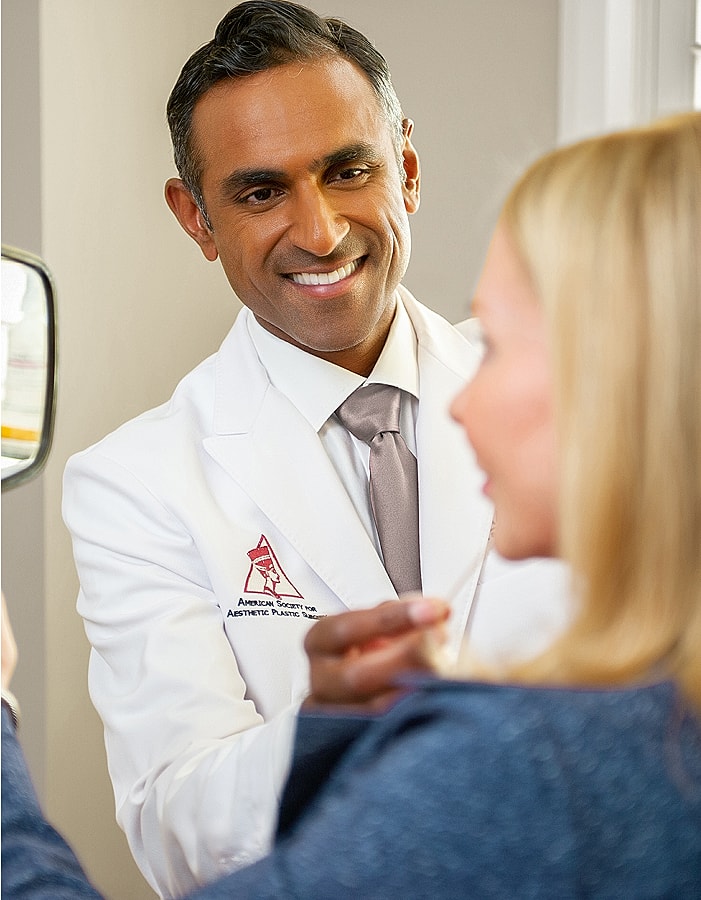
Dr. Narasimhan’s passion for plastic surgery is evident in his impressive credentials, which include:
American Board of Plastic Surgery and American Board of Otolaryngology (Head & Neck Surgery)
Guest faculty at internationally renowned cosmetic surgery meetings, such as the Dallas Cosmetic Symposium
Chemical peels offer a direct way to refresh the skin and improve visible concerns without surgery. Benefits may include:
For many patients, a peel is a practical way to improve skin that feels rough, congested, or weathered by sun and time.
You may be a good candidate if you:
Chemical peels may need to be delayed or adjusted if you:
Patients should share their full medical history, medications, and relevant background before a peel, including a family history of scarring, previous peel reactions, use of isotretinoin, and a history of cold sores.
Patients with darker skin color, including black skin, can still be candidates for chemical peels, but treatment selection matters because pigment changes are a known consideration in skin of color.

Your appointment starts with a skin assessment and a discussion of your goals. Our team performs a thorough skin analysis before the chemical peel and collaborates with Dr. Narasimhan on treatment planning. A typical appointment may include:
Many peels are applied with gauze, brushes, or a cotton-tipped applicator, depending on the formula and provider preference. Patients most often feel warmth, tingling, or a mild stinging sensation during the peel. Some treatments are very light. A medium chemical peel can feel stronger and may come with more visible downtime.
Right after a peel, the skin may look pink, feel tight, or seem warm. Some patients have very little visible change at first. Others start peeling over the next day or two.
A light chemical peel may cause light flaking with little interruption. A medium peel often causes more visible peeling. Many patients plan for five to seven days of noticeable dryness or shedding with stronger peels, and some peels can keep the skin looking pink or freshly treated for about two weeks.
Patients are advised to:
Aftercare depends on the peel and the way your skin responds. Your provider may recommend healing products and may tell you to apply ointment or use products similar to petroleum jelly if the peel is stronger and the skin needs extra barrier support. Some patients also use ice packs for comfort early on, depending on the peel depth and how the skin feels.
That depends on the peel depth and the concern being treated.
With stronger peels, the skin may keep improving for a few months as turnover and collagen response continue. Deeper peels may offer more noticeable resurfacing, while superficial peels usually need maintenance.
Results can last for weeks to months, depending on the type of peel, your skin care routine, your sun exposure, and whether you stay on a maintenance plan.
A light peel often needs regular upkeep. A medium chemical peel may last longer. A deep chemical peel can produce more dramatic improvement, but it also comes with more downtime, more risk, and a different recovery process than the peels usually chosen in a medspa setting. Some deeper peels can create a temporary or permanent change in skin color, which is one reason peel depth matters so much.
Some patients want one peel before an event or season change. Others need a series to address acne, pigment, or texture. A common way to frame it:
Your provider will recommend the right treatment schedule based on your skin and your goals.
Dermaplaning removes surface buildup and peach fuzz with a blade. Chemical peels use a chemical solution to exfoliate and treat concerns like acne, rough skin, and discoloration more directly.
Microdermabrasion is a mechanical exfoliation treatment. Chemical peels can reach deeper depending on whether the treatment is a light, medium, or deeper peel.
Some patients ask about lasers, facials, or dermal fillers. Those treatments do different jobs. A peel focuses on surface renewal, tone, congestion, and texture. It does not replace volume correction or lifting.
Yes. Chemical peels can be part of a larger medspa skin plan. Some lighter peels may be combined with other exfoliating or facial-based treatments, depending on the skin and the goal. Depending on your skin, your provider may discuss combining peels with:
Combination planning matters. The skin barrier has limits, and the best results come from choosing the right sequence and the right spacing.

At Narasimhan Plastic Surgery, skin treatments are approached with the same care and judgment that shape the rest of the practice. The goal is not to overdo the skin or push a one-size-fits-all peel, but to choose the right level of treatment for the patient sitting in front of us.
Every peel starts with a close look at the skin, the concern, and the amount of downtime that makes sense for your life. From there, the plan is built around clarity, safety, and results that look fresh and natural. The Tampa chemical peels experience at Narasimhan Plastic Surgery is built around personalized care and thoughtful guidance, drawing patients from St. Petersburg, Clearwater, and the surrounding area for skin treatments that feel medical, polished, and never routine.
A consultation is where the right peel plan starts. Your provider will review your skin, your goals, your downtime tolerance, and your history of breakouts, pigment, or sensitivity. If you are considering chemical peels in Tampa & St. Petersburg, Narasimhan Plastic Surgery can help you decide whether a light chemical peel, medium chemical peel, or another treatment path fits your skin best.
The cost of chemical peels depends on the type of peel, the strength of treatment, and how many sessions are recommended.
The main categories are superficial peels, medium chemical peels, and deep chemical peels. They differ by depth, downtime, and the concerns they can treat.
They can help some acne scars, especially more superficial marks and discoloration. Deep scars often need a different or combined treatment plan.
Yes, sometimes. Patients with a history of cold sores should tell their provider before treatment because antiviral medication may be recommended.
That depends on the peel. With lighter peels, patients may be able to wear makeup sooner. Stronger peels usually require more healing time.
They can be, with the right peel and the right provider. Peel selection matters because darker skin tones can have a higher risk of pigment changes, including post-inflammatory hyperpigmentation.
Some medical peels may be used by specialists for certain lesions, but actinic keratosis and precancerous growths need proper medical evaluation. That is a separate conversation from a routine cosmetic peel.
Common peeling agents include glycolic acid, salicylic acid, lactic acid, alpha hydroxy acid blends, trichloroacetic acid, and, in select deeper peels, phenol-based formulas.
Learn More
Learn More
Learn More
Learn More
Learn More
Learn More
Learn More
Learn More
Learn More
Learn More
Learn More
Learn More
Learn More
Learn More